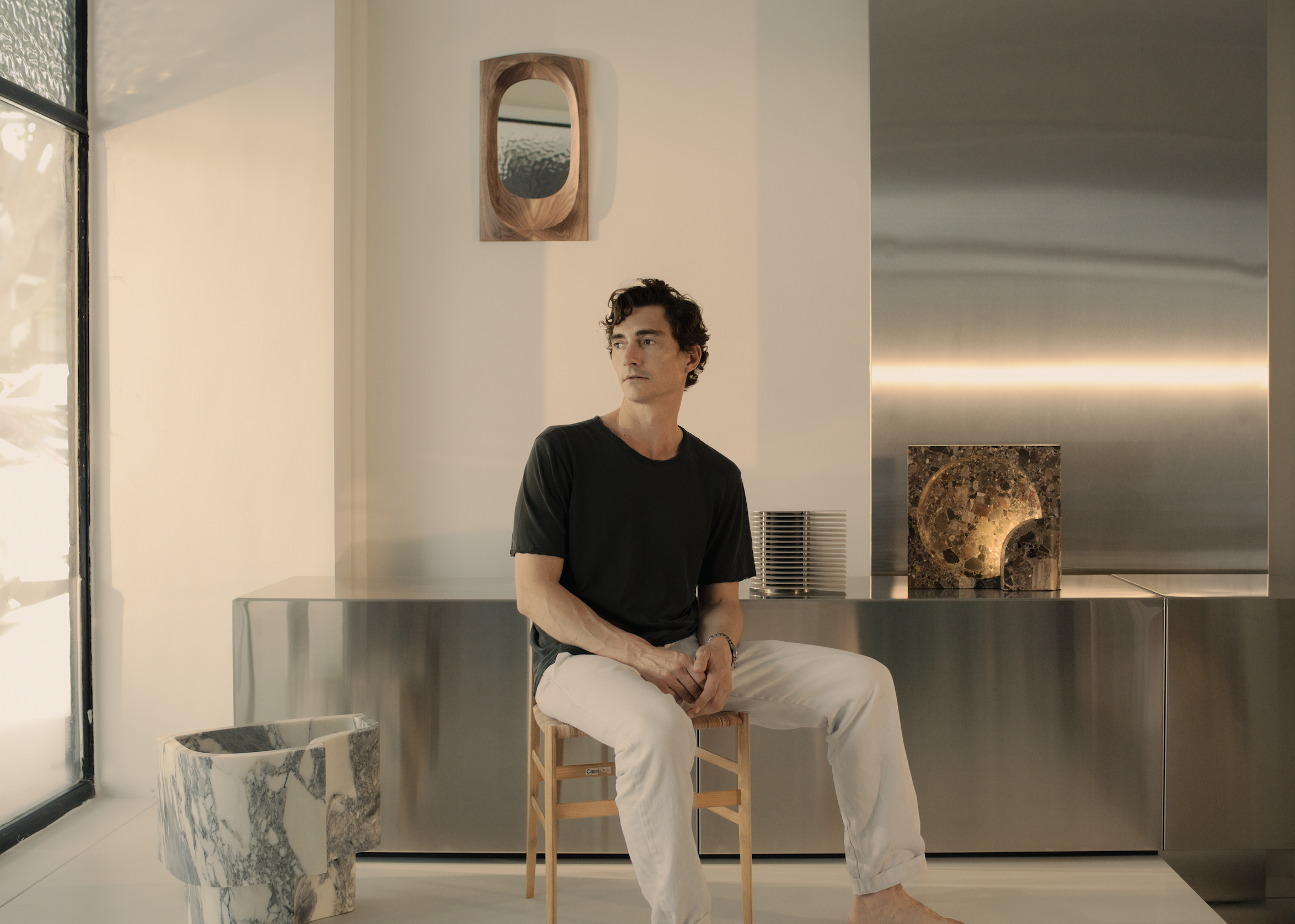
Henry Wilson
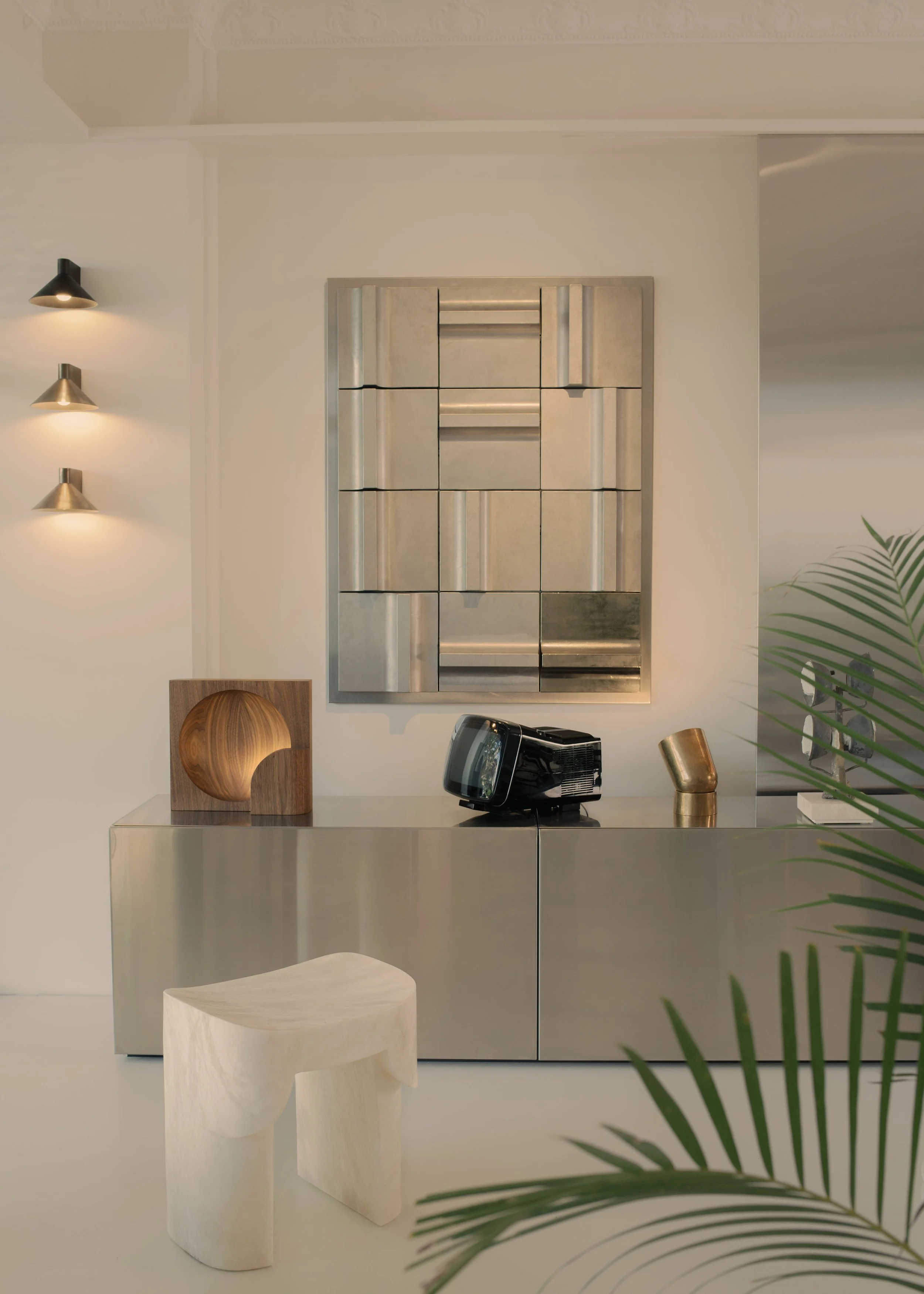
A designer of furniture, lighting, accessories and components in metal, stone and glass. Although I have travelled extensively and lived overseas, Sydney is the place to which I habitually retreat, and where I feel most unfettered creatively.
Studio Henry Wilson was established in inner Sydney in 2012.
My work is characterised in part by utilitarianism, giving precedence to form and function. However, the embodiment of feeling is also important to me; I’m interested in the imperfect beauty that comes from objects made by hand, and in the creation of pieces that retain a sense of individual charm while not compromising the robust framework required for manufacture. Further, it matters that the work endures; well-made things last, and I see longevity as one of the simpler forms of sustainability we can hope to achieve as contemporary designers.
This has led me to foster long-term collaborations with select, like-minded suppliers and manufacturers, including artisanal European stonemasons, and a local foundry that manufactures elements cast in bronze and aluminium.
Predominantly, what draws and influences me is the Australian landscape – in its multiformity and in the singular qualities of its light – with an emphasis on resolution of forces to add energy. Nothing remains perfect in Australian conditions, and I believe weathering is to be accepted and valued even up to the extent of effecting subtle imperfections during manufacture.
It has long appealed to me, too, that Australia affords a freedom to pursue ideas without the burden of an indurate historical aesthetic, even as I acknowledge and appreciate the sophistication imparted by centuries of technological development, design practice and philosophy in Europe and throughout the industrialised world.
Each of my designs begins with concepts and forms gleaned from constant excursions into art, nature, andheavy industry, documented in photographs, notes and drawings. The resulting sketches and simple cardboard or plasticine models evolve through use of 3D software and printing technology. Sometimes ideas lie dormant at length before finding application – directions shift – a design for a lamp meets an obstacle, for example, and a hook, bookend or chair eventuates.
I find that remaining open to this dynamic and following the particular energy of a project reliably bears fruit, likewise editing and occasionally discarding concepts and designs as they evolve.
Materials often speak for themselves, evoking an intuitive response connected to their physical properties and design heritage. The anthropology of design obviously has a linear narrative; contemporary designs and production methods stem from those that have come before. But the act of design is a fluid exchange between inspirations, materials and production.